
The longevity consumer: what the testing boom can and cannot tell you
Whole-body scans and blood-test memberships have drawn hundreds of millions in investment. The evidence on screening healthy people is more cautious than the marketing.
Oaklore Research · 15 November 2026 · 7 min read · For patients and clinics
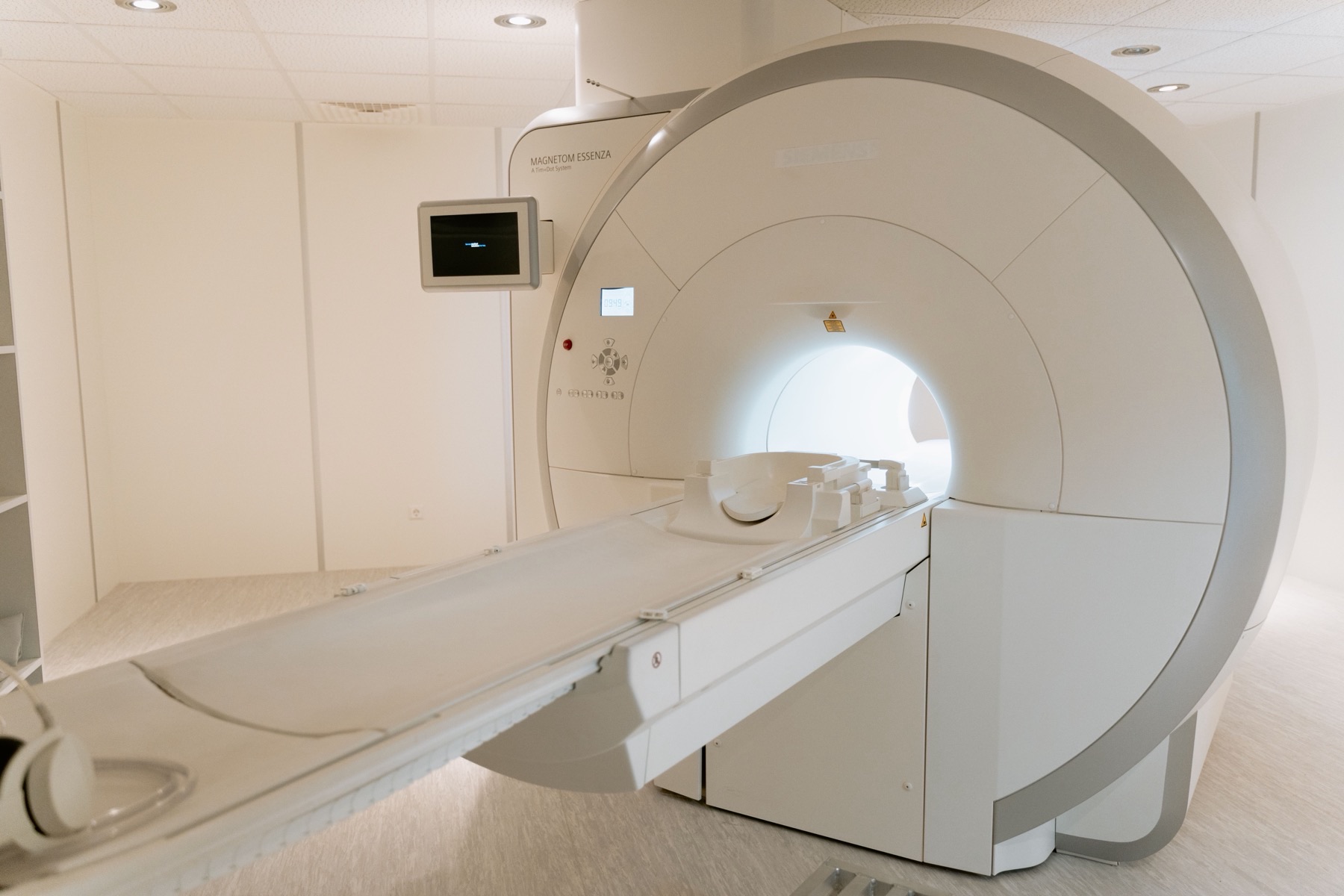
A new kind of health customer has arrived. They are not ill and they are not waiting for symptoms. They want to know what is happening inside their body now, and they are willing to pay to find out. Whole-body MRI scans, annual blood-panel memberships and clinics built around "longevity" have turned that wish into a fast-growing consumer market.
This piece covers who the main players are, what the published evidence says about screening people who feel well, and what to ask before booking. Figures are as of November 2026.
The companies and the money
The best-funded names are US-based and privately held. Function, a membership platform built around laboratory blood testing, closed a $298 million Series B in November 2025 at a $2.5 billion valuation, led by Redpoint Ventures. The company said it had completed more than 50 million lab tests since 2023, that members could have blood drawn at 2,000 Quest locations, and that its MRI scans were available at 130 locations 1.
The scans came from an acquisition. In May 2025 Function bought Ezra, a whole-body MRI company. The law firm that advised Ezra on the sale said the deal let Function announce a full-body MRI priced at $499, down from $1,500, with scan time cut from 60 minutes to 22 2.
Prenuvo, the other prominent whole-body MRI brand, announced in February 2025 that it had raised a $120 million Series B, co-led by Forerunner Ventures and Left Lane Capital with existing investor Felicis, and said it had passed 110,000 members 3. These figures come from company announcements as reported in trade press. Because neither company is listed, there are no audited public filings to check them against.
Prices are falling, scans are getting shorter, and subscriptions increasingly bundle imaging with blood tests and software. Radiologists have noticed. A July 2026 feature from the Radiological Society of North America (RSNA) described whole-body MRI as a largely self-pay service whose growth has been driven by private companies promoting it for longevity and prevention. One academic radiologist told RSNA that patients "are getting whole-body MRI by the droves" 4.
What the scans actually find
Scanning healthy people does find things. The difficulty is that it finds a great deal, and most of it does not matter.
A 2018 systematic review in The BMJ pooled 32 studies covering 27,643 apparently healthy adults who had brain or body MRI. It found potentially serious incidental findings in 3.9% of people having brain and body MRI, rising to 12.8% once findings of uncertain seriousness were included. The limited data on outcomes suggested that only 48 of 234 potentially serious findings (20.5%) led to a serious final diagnosis 5.
A newer meta-analysis in European Radiology, published online in August 2025, looked specifically at whole-body MRI for cancer detection in people without symptoms. Across ten studies and 9,024 participants, confirmed cancer was found in 1.57% of people. The authors concluded that the modest detection rate, frequent incidental findings, unstandardised protocols and lack of long-term outcome and cost-effectiveness data limit its current clinical use 6.
Real-world programmes show a similar pattern. In the RSNA feature, radiologists at Weill Cornell reported that of about 160 patients scanned in their programme's first 18 months, about 90% had some kind of finding (most needing no follow-up), about 30% had findings that were not inherently worrying but needed follow-up, and about 1% of findings were malignant or suspected to be 4.
Company data, which should be read with that source in mind, point the same way. Prenuvo's Polaris study, presented at the American Association for Cancer Research annual meeting in 2025, reported that 2.2% of 1,011 largely symptom-free patients at a single Canadian clinic were diagnosed with biopsy-proven cancer, and that about half of biopsies prompted by scan findings confirmed cancer 7.
Finding a cancer is not the same as saving a life. Some conditions found this way would never have caused harm in a person's lifetime, which screening bodies call overdiagnosis 10. Others would have been caught in time anyway. Only long-term studies comparing screened and unscreened groups can show whether scanning reduces deaths, and the European Radiology review notes that long-term outcome data for whole-body MRI are lacking 6.
What the official bodies say
United States. In April 2023 the American College of Radiology said it "does not believe there is sufficient evidence" to justify recommending total-body screening for people with no symptoms, risk factors or family history suggesting disease. It added that there was no documented evidence that such screening is cost-efficient or prolongs life, and warned it would lead to "unnecessary follow-up testing and procedures" 8. The US Preventive Services Task Force has not issued a recommendation on whole-body MRI. The closest precedent is pancreatic cancer, where it recommends against screening adults without symptoms (a grade D recommendation). It found no studies reporting the accuracy of CT, MRI or endoscopic ultrasound as screening tests for pancreatic cancer, and concluded that the potential benefits do not outweigh the potential harms 9.
United Kingdom. The UK National Screening Committee published guidance on commercial screening tests in November 2023. It says that for some tests there are no reliable studies confirming improved health outcomes for those screened, and that false positive results are inevitable in screening. If a commercial test finds something, it is up to the individual to seek further advice or treatment, and tests often need to be repeated by the NHS. It also notes that all providers of screening services in England must by law be registered with the Care Quality Commission 10.
Blood tests: a different kind of evidence question
Blood-test memberships raise a quieter version of the same issue. Run enough markers on a healthy person and some results will fall outside the reference range by chance, and each one invites a repeat test or a GP appointment. The NSC guidance applies here too: it notes that commercial tests often have no quality assurance, so results may not be comparable between providers 10.
The most rigorous evidence so far on a blood-based screening idea comes from the NHS-Galleri trial of a multi-cancer early detection test, whose main results were published in September 2026. It randomised 142,250 people in England aged 50 to 77. The trial did not meet its primary endpoint of reducing the combined number of stage III and IV cancers across 12 prespecified cancer types. In a prespecified secondary outcome, stage IV cancers were less common in the test group, and the researchers plan longer follow-up to see whether the differences lead to better outcomes. The NHS and other health bodies will consider the evidence; the trial team's announcement did not include a decision on wider NHS use 11. Even a large, well-run trial of a promising test can produce a mixed answer.
Longevity clinics
Alongside scans and memberships, a growing number of private clinics sell "longevity" programmes that combine testing with coaching, supplements and sometimes prescription treatments. The sensible approach is to judge each part of a package on its own evidence, whatever the package is called. Where a programme includes prescription-only medicines, UK law prohibits advertising them to the public 12, and decisions about them belong with a prescriber after a proper assessment.
What a sensible consumer should know
- Ask what the test is for. The UK NSC suggests asking whether there is evidence that the test prevents a future health problem, or whether it only offers peace of mind 10.
- Plan for a finding. In one US hospital programme, about nine in ten people scanned had at least one finding 4. Ask what happens next, who interprets the result, and whether follow-up is included in the price.
- Check registration. In England, check that the provider is registered with the CQC 10.
- Keep symptoms separate. Screening is not for people with symptoms, who should see their GP. The NSC is explicit on this 10.
- Check what is already free. The NSC suggests checking whether the condition is already covered by a free NHS screening programme 10.
What it means for patients
A scan or blood panel gives you information, but it cannot tell you which findings matter. In the published series above, many people scanned had something reported, and most of those findings did not turn out to be serious. If you go ahead, choose a regulated provider, find out what follow-up costs, and treat the result as the start of a conversation with a clinician, not a verdict.
What it means for clinics
Demand for proactive testing is real and prices are falling. Clinics that offer or refer for it will be judged on how they handle findings: clear consent about incidental results, a defined follow-up pathway and honest language about what screening can show. Overstating the benefit to healthy people is both an ethical and a regulatory risk.
Sources
- TechCrunch, "Function Health closes $298M Series B at a $2.5B valuation, launches medical intelligence", 19 November 2025 (trade press, reporting company statements). https://techcrunch.com/2025/11/19/function-health-closes-298m-series-b-at-a-2-5b-valuation-launches-medical-intelligence
- Lowenstein Sandler, "Lowenstein represents Ezra AI in sale to Function Health", 5 May 2025. https://www.lowenstein.com/news-insights/firm-news/lowenstein-represents-ezra-ai-in-sale-to-function-health
- HIT Consultant, "Prenuvo Raises $120M to Expand Whole-Body MRI Screening", 13 February 2025 (trade press reporting the company's announcement; the original release could not be opened). https://hitconsultant.net/2025/02/13/prenuvo-raises-120m-to-expand-whole-body-mri-screening/
- RSNA News, "Whole-Body MRI Expands, Leaving Patients Weighing Risks", 1 July 2026. https://www.rsna.org/news/2026/july/whole-body-mri
- Gibson LM et al., "Potentially serious incidental findings on brain and body magnetic resonance imaging of apparently asymptomatic adults: systematic review and meta-analysis", BMJ 2018;363:k4577, 22 November 2018. https://www.bmj.com/content/363/bmj.k4577
- Martins da Fonseca J et al., "Whole-body MRI for opportunistic cancer detection in asymptomatic individuals: a systematic review and meta-analysis", European Radiology 2026;36(3):1813 to 1823, online 30 August 2025. https://pubmed.ncbi.nlm.nih.gov/40884613/
- Prenuvo, "Prenuvo's Polaris Study Reveals Whole-Body MRI Can Identify Cancers Overlooked by Standard Screenings" (company press release), 29 May 2025. https://www.healthcaredive.com/press-release/20250528-prenuvos-polaris-study-reveals-whole-body-mri-can-identify-cancers-overloo-1/
- American College of Radiology, "ACR Statement on Screening Total Body MRI", 17 April 2023. https://www.acr.org/News-and-Publications/Media-Center/2023/ACR-Statement-on-Screening-Total-Body-MRI
- US Preventive Services Task Force, "Pancreatic Cancer: Screening", final recommendation, 6 August 2019. https://www.uspreventiveservicestaskforce.org/uspstf/recommendation/pancreatic-cancer-screening
- UK National Screening Committee, "NHS and commercial health screening tests: important considerations", GOV.UK, 21 November 2023. https://www.gov.uk/government/publications/uk-nsc-commercial-screening-test-considerations/nhs-and-commercial-health-screening-tests-important-considerations
- Queen Mary University of London, "Major NHS trial provides new evidence on multi-cancer blood test", 23 September 2026. https://www.qmul.ac.uk/news/latest-news/2026/medicine-and-dentistry/fmd/major-nhs-trial-provides-new-evidence-on-multi-cancer-blood-test.html
- The Human Medicines Regulations 2012, regulation 284, "Prescription only medicines". https://www.legislation.gov.uk/uksi/2012/1916/regulation/284
This article is for general information. It is not medical advice. Speak to a qualified clinician about your own circumstances.